Introduction to API Design Patterns
Modern APIs are essential for interoperability between systems. A good design improves scalability, security, and the developer experience.
Advantages of gRPC over REST
Performance (Binary over Text)
gRPC uses Protocol Buffers (Protobuf), a compact binary format, whereas REST usually uses JSON (text-based, verbose).
Faster serialization/deserialization and smaller payloads → lower latency and bandwidth usage.
Streaming Support
gRPC natively supports:
Unary RPC (request/response like REST)
Server streaming
Client streaming
Bidirectional streaming
This is very useful for real-time communication (e.g., chat, IoT telemetry, video streaming, stock price updates).
Strongly Typed Contracts
The service definition is in a
.protofile.Ensures type safety and backward compatibility (if you evolve the API carefully).
Auto-generates client and server code in multiple languages.
Code Generation
gRPC provides stubs and strongly typed clients automatically, saving development effort.
Avoids manual boilerplate code like building JSON parsing/HTTP clients.
Multiplexing over HTTP/2
Built on HTTP/2, allowing multiple requests on a single connection, with lower overhead compared to multiple HTTP/1.1 connections.
Includes features like header compression.
Built-in Deadlines & Cancellation
Clients can set deadlines/timeouts easily.
Allows better control over long-running requests and resource cleanup.
Ecosystem for Microservices
gRPC is designed for service-to-service communication, especially in microservice architectures.
Plays well with service meshes (Istio, Linkerd).
✅ When to use gRPC
High-performance microservices talking to each other.
Real-time streaming communication (chat, telemetry, gaming, video).
Internal APIs where you control both ends and can enforce gRPC usage.
When type safety and auto-generated SDKs are important.
✅ When REST may be better
Public-facing APIs (developer adoption, simplicity).
When human readability/debuggability matters.
When leveraging HTTP ecosystem features (caching, proxies, CDNs).
For lightweight CRUD-style operations.
2. Security First
Recommendations:
Authentication with OAuth2 or JWT
Encryption with HTTPS
Apply rate limits per IP or token
3. Versioning
Avoid breaking compatibility. Use routes like:
/api/v1/users /api/v2/users
You can also version via headers if you prefer to keep a single route.
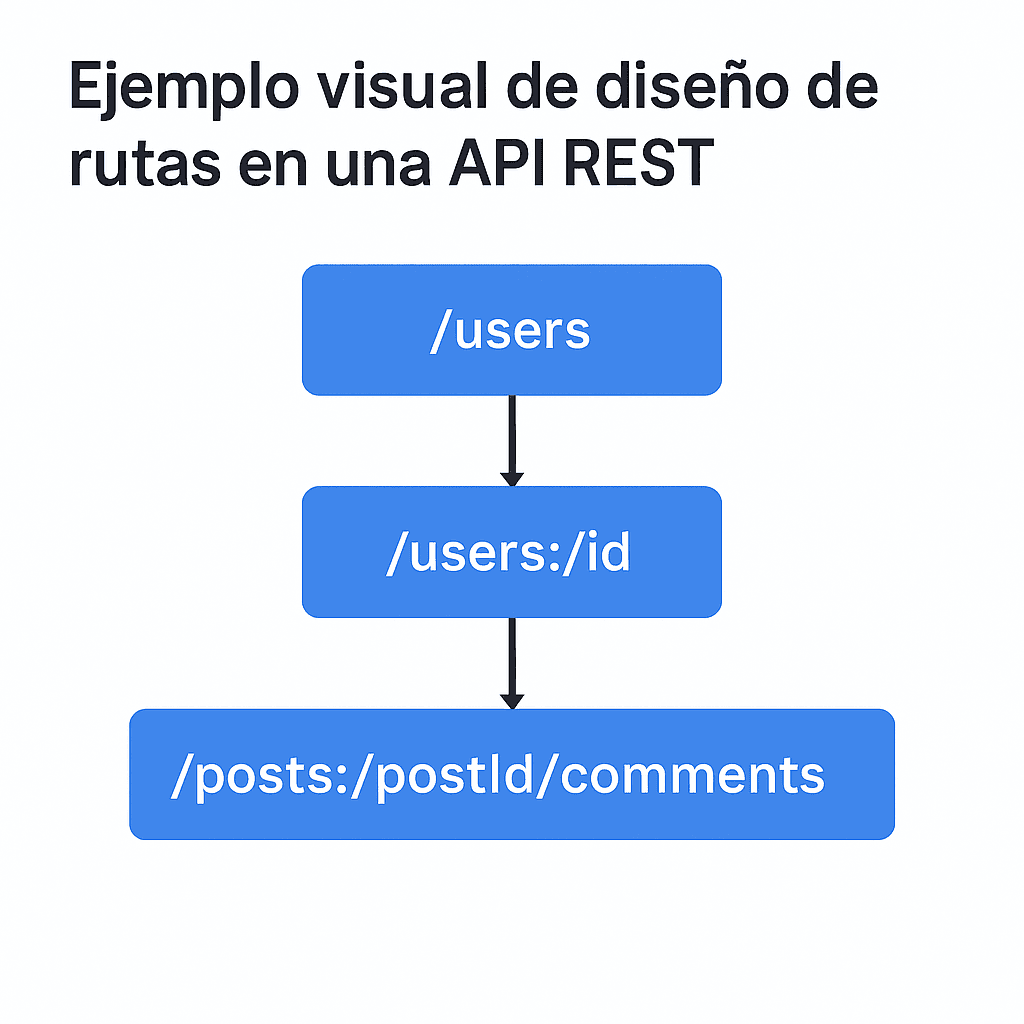
📸 Example image
4. Documentation
A good API should be well-documented. Recommended tools
Conclusion
Designing an API is not just a technical matter — it's also about considering those who will use it. A clear, secure, and well-documented design is key to the success of any modern product.